
How to Find a Signature Scent: A Modern Guide for Men Beyond Cologne
|
|
Time to read 16 min


subscribe to news
Stories of scent and craft, dispatched occasionally from our atelier. Fewer emails, more meaning.
|
|
Time to read 16 min
Most men are taught fragrance through a surprisingly narrow vocabulary.
Fresh.
Woody.
Clean.
Citrus.
Maybe something darker for evening.
Walk into almost any fragrance department and the visual language reinforces the same idea before you have smelled anything: dark glass, steel, leather, ocean water, black pepper, cedar, horsepower, mountains, tailoring. The bottle has already told you what kind of man the fragrance expects you to be.
The perfume itself is usually more interesting.
A man can smell extraordinary in rose. Violet can feel cool rather than feminine. Orris can be dry and almost austere. Jasmine can disappear into woods. Vanilla can be darker than many materials marketed specifically to men.
This is where finding a signature scent becomes much easier.
Stop asking which fragrance is sufficiently masculine.
Start asking which smell you actually want to live with.
A signature scent is simply a fragrance that becomes recognizably associated with you because you wear it repeatedly.
It does not need to symbolize your personality.
It does not need to announce your occupation, age, ambition, sexuality, or taste level.
And it does not need to be the only perfume you own.
The useful distinction is familiarity.
You reach for it without having to negotiate with yourself. It works through an ordinary day. You enjoy the way it smells several hours after application, not just the first thirty seconds. Eventually someone close to you may encounter it on a coat or in a room and think of you.
That association is built through repetition rather than branding.
Which is why choosing a signature fragrance according to someone else's idea of the man you should smell like is an odd place to begin.
The word cologne has become casual shorthand in the United States for almost any fragrance worn by a man.
Historically, Eau de Cologne referred to a particular light fragrance tradition built around citrus and aromatic materials, and the term later became associated with concentration as well. Contemporary men's fragrance encompasses far more than that lineage.
Yet the old cologne vocabulary remains powerful.
Bergamot.
Lavender.
Herbs.
Cedar.
Vetiver.
Moss.
Marine notes.
Dry woods.
These materials are beautiful. The problem arises when they become an invisible border around what men are expected to wear.
Rose sits outside it.
Violet often does.
Powder frequently does.
So do many creamy florals and softer skin scents.
Once those borders disappear, the number of possible signature fragrances expands dramatically.
We learn the gender of perfume.
That may sound obvious, but experiments show how powerful the labeling itself can be. In one study, neutral scents labeled as masculine or feminine were subsequently perceived as more masculine or feminine in accordance with the label. Other research with fine fragrances has likewise shown that telling subjects an ostensibly unisex fragrance is male or female changes associated judgments.
The bottle and copy can therefore influence the smell before we have fully evaluated it.
This is particularly relevant to flowers.
Rose has been coded heavily feminine in contemporary Western fragrance marketing. Lavender, meanwhile, spent decades inside the vocabulary of masculine fougères despite being a flower.
There is nothing chemically masculine about lavender and nothing chemically feminine about rose.
Composition creates context.
Marketing supplies much of the rest.
A note list is useful.
It is also capable of ruining a perfume before you have smelled it.
A man sees:
Rose. Orris. Violet.
He imagines a powdery floral.
Another sees:
Bergamot. Vetiver. Cedar.
He imagines something safely masculine.
Neither description tells him how the actual perfume behaves.
Rose might appear only as cool floral texture beneath woods.
Vetiver could be softened with vanilla until it feels almost creamy.
A jasmine-heavy fragrance may smell less overtly floral than something built from so-called masculine aromatics.
When possible, smell the perfume before constructing a story about who it belongs to.
Your nose is often less conservative than the category printed on the box.
Men's fragrance culture has become unusually preoccupied with performance.
How many hours?
How far does it project?
How many compliments?
How many sprays?
These can be useful questions when performance itself matters to you.
They are not a particularly good way to identify a fragrance you will enjoy wearing for years.
Projection tells you how fragrance occupies space.
Longevity tells you how long enough of the composition remains perceptible.
Neither tells you whether you will still want to smell it on yourself after the novelty disappears.
The compliment question is even stranger.
Another person's approval may be pleasant. It does not mean you want to spend eight hours inside the fragrance they enjoyed for fifteen seconds.
A signature scent ultimately has one unusually demanding audience.
You.
Possibly, but we should be careful here.
The original version of this article claimed that citrus increases alertness, woods lower nervous-system activation, resins create inward focus, and fragrance effectively functions as state regulation.
The evidence does not justify such a tidy emotional map.
Odors can affect mood, memory, cognition, and physiological response, but those effects depend on context, learned association, pleasantness, expectation, and individual experience.
There is, however, interesting evidence that wearing fragrance can alter how a person perceives themselves.
In a double-blind experiment, men given a fragranced body spray reported higher self-confidence and self-perceived attractiveness than a control group. Women who later viewed silent videos of the men also rated those wearing the fragranced product as more attractive, even though the women could not smell them, suggesting that changed self-perception may have influenced behavior.
A later study also found higher ratings of self-esteem and attractiveness when male body odor was fragranced.
That is more interesting than saying sandalwood automatically makes a man calm.
Sometimes liking the way you smell changes how you carry yourself.
The fragrance need not prescribe the emotion in advance.
You do not need to know perfume terminology to begin.
Think about the fragrances you have actually finished rather than the ones you admired briefly.
What remained consistent?
Perhaps everything you own eventually leads back to vetiver.
Maybe you claim to like citrus, but what you really love is the dry wood underneath it.
Perhaps lavender keeps appearing.
Perhaps the fragrances you remember most all contain incense.
Or perhaps you have spent years buying “fresh” colognes and are bored because the category itself has become too familiar.
That boredom is useful.
It may mean your next signature scent should contain fewer of the things you think you like.
Bergamot is one of the great materials of perfumery and an obvious reason traditional cologne structures remain pleasurable.
But liking bergamot does not require remaining inside a conventional citrus fragrance.
It can open:
a rose fragrance,
an incense composition,
a soft floral,
a sandalwood perfume,
a patchouli fragrance,
an amber,
or something almost musky.
The citrus provides the initial brightness you recognize while the rest of the perfume leads somewhere unfamiliar.
This is often an easier way to expand your taste than abandoning everything familiar at once.
Keep one element.
Change the context.
Men are often introduced to sandalwood, cedar, and vetiver long before anyone suggests rose or jasmine.
But woods become far more interesting when flowers are allowed inside them.
Sandalwood can make rose feel warmer and less obviously petal-like.
Vetiver can dry out a lush floral.
Patchouli underneath jasmine can make the flower darker and stranger.
Orris is technically derived from a rhizome rather than the iris flower, yet its powdery, woody character sits beautifully between the floral and woody worlds.
A flower does not necessarily make a fragrance more floral.
Sometimes it makes the wood more interesting.
Lavender, rosemary, sage, basil, and other aromatic materials have long belonged comfortably in men's fragrance.
Rose can produce a similarly interesting contrast when treated differently.
Put rose beside herbs and it becomes greener.
Beside incense it can feel austere.
Beside vetiver it becomes dry.
Beside orris and violet it can become cool enough that the usual romantic associations almost disappear.
This is one reason we think many men who insist they dislike floral fragrance have simply not smelled the right construction yet.
They dislike a genre.
Not necessarily the materials.
Powder is another effect many men have been trained to reject before smelling it.
Yet powder in perfume can come from several very different territories.
Orris can create a cool, dry, almost suede-like powder.
Violet can feel soft and abstract.
Certain musks create another kind of powder entirely.
The result can be crisp rather than cosmetic, austere rather than nostalgic.
This is the kind of distinction that note lists rarely communicate well.
You need to smell it.
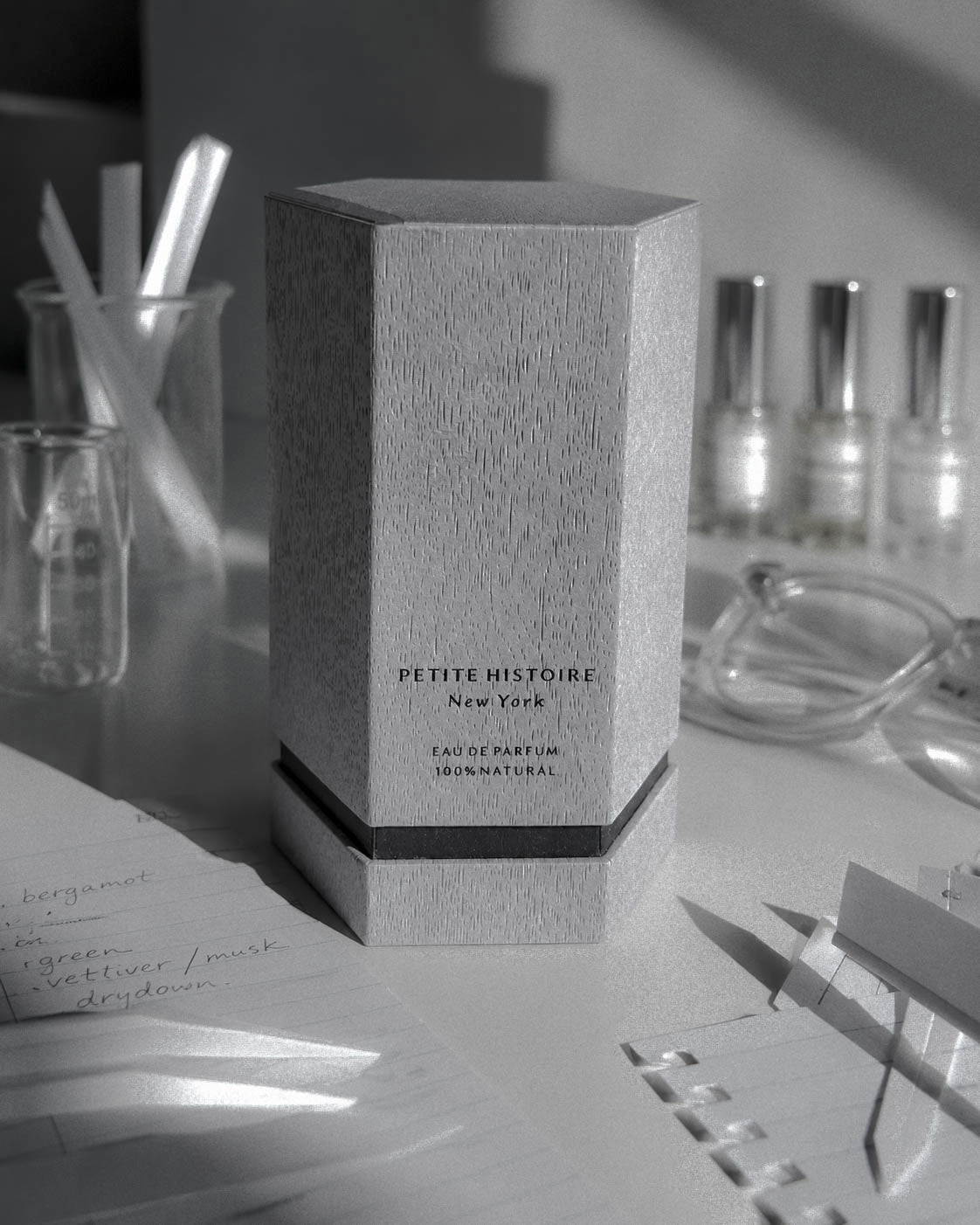
This is something we did not fully anticipate when we created Envie Desoir.
The fragrance is categorized on our site as a Cologne, Soft Floral, and the structure explains why those two descriptions can comfortably coexist. It begins with bergamot and angelica seed before moving into rose, orris, and violet, then settles into sandalwood and ambrette.
On paper, a man conditioned by traditional fragrance categories might stop reading at rose, orris, violet.
In practice, we have repeatedly found men gravitating toward it.
Often they are not looking for floral perfume.
They are looking for a cool alternative to cologne.
That distinction is important.
The fragrance has some of the properties that make cologne so wearable without reproducing the standard aromatic formula.
Bergamot provides brightness.
Angelica gives the opening a dry green quality.
The floral center remains cool and restrained rather than sweet.
Orris and violet change the rose until it feels more like texture than bouquet.
Sandalwood and ambrette create a soft, dry finish close to the skin rather than a heavy woody base.
Our product description calls it a cooler interpretation of floral fragrance, with moderate sillage and an intimate aura.
That is also why we think the response from men has been so consistent.
It feels polished in a recognizable way.
The route to that polish is unexpected.
This may be the larger lesson.
Fragrance categories carry visual baggage.
A woody fragrance sounds restrained.
A floral sounds decorative.
The actual perfume can reverse those assumptions completely.
A densely constructed woody amber can be enormous.
A rose-and-orris composition can be almost austere.
Envie Desoir is floral, but the floral material is edited down into coolness, powder, air, and skin.
Someone looking for a quiet signature scent may therefore find more restraint in the rose fragrance than in the bottle marketed as minimalist cedar.
Names are useful.
Smell is better.
Perfume shopping encourages fantasy.
Evening in Paris.
A Mediterranean hotel.
A black-tie dinner.
A desert at dusk.
Most perfume, however, is worn while answering email.
Going to lunch.
Sitting through a meeting.
Getting into a car.
Walking home.
If you are looking for a signature fragrance, test it in those conditions.
Does it become irritating after three hours?
Do you become tired of the sweetness?
Do you keep wanting to smell your sleeve?
Does it feel appropriate at ten in the morning and still interesting at dinner?
A perfume that survives ordinary life has a much better chance of becoming yours than something spectacular during a ten-minute encounter at a counter.
The opening sells a great deal of perfume.
It is also the shortest part of your relationship with it.
Citrus, aromatic materials, and certain bright florals can create an immediate impression that changes substantially as the more volatile ingredients recede.
The fragrance you live with may be the one appearing an hour or two later.
This is particularly important when leaving familiar territory.
A fragrance containing rose may seem unexpectedly floral for the first few minutes and then become primarily woody.
A resinous composition may begin brightly.
A vanilla may become much drier than its note list suggested.
Do not buy the introduction without meeting the rest of the perfume.
One test is useful.
Several are better.
Mood, weather, environment, and simple attention all affect what we notice in perfume.
The fragrance itself may also become easier to understand after you stop trying to decode it.
This is why sampling is so valuable when choosing a signature scent.
Wear one candidate during the day.
Another at night.
Return to the first.
Do not rank them constantly.
Notice which bottle you begin reaching for without thinking.
Preference often becomes clearer when the test stops feeling like a test.
If a perfume feels too quiet, it may need another spray.
Or it may simply be a quiet perfume.
These are different things.
Men's fragrance culture sometimes treats projection as a defect that can always be corrected through application.
But increasing the dose also increases everything else.
A sweetness you barely tolerated becomes larger.
A musk becomes denser.
A woody base becomes heavier.
A fragrance designed to remain close to the body loses some of the quality that made it interesting.
Before adding more, ask whether you actually want more of what you are smelling.
There is no requirement to have exactly one.
Some people genuinely enjoy a single recognizable perfume year-round.
Others want a small group.
You might naturally end up with:
one easy fragrance you wear without thinking,
one warmer or darker scent,
and one composition that changes the mood entirely.
That is a wardrobe rather than a signature in the strictest sense, but the distinction hardly matters.
The goal is not to create another system to obey.
It is to own perfumes you actually wear.
Not necessarily.
Rarity is an overrated substitute for taste.
A fragrance does not become less beautiful because other people wear it.
Nor does an obscure perfume automatically become more personal.
What creates the signature is repetition and association.
If a well-known fragrance smells exactly right on you and you enjoy wearing it, obscurity would add very little.
On the other hand, smaller and niche perfume houses can make it easier to encounter structures outside the narrowest commercial conventions.
That is useful when the familiar categories have stopped surprising you.
But niche is an origin or market position.
It is not a guarantee of quality.
The more useful answer is: smell it first.
If you love it, the category has already failed to prevent you from loving it.
Research on gender labeling shows that the gender assigned to a scent can affect how people subsequently interpret it.
Removing the label can therefore reveal how much of your first reaction belonged to the smell and how much belonged to expectation.
This does not mean masculine and feminine fragrance styles do not exist culturally.
They obviously do.
It means you are allowed to decide whether those cultural conventions are useful to you.
Sometimes they are.
Sometimes they prevent you from finding the best bottle in the room.
We make natural perfume because of the materials we want to work with, not because botanical ingredients possess a special ability to discover someone's true identity.
Natural extracts can contain intricate internal profiles shaped by species, harvest, origin, and extraction. Those characteristics create the textures and tensions we enjoy composing with.
They do not automatically make a perfume more masculine, personal, sophisticated, sustainable, or better suited to your skin.
The test remains the same.
Do you want to wear it again?
Luxury perfume can accumulate an extraordinary amount of language around that very simple question.
It is worth returning to it occasionally.
Begin with several perfumes rather than one highly researched candidate.
Include something familiar.
Then include something that contains at least one material you would normally reject.
Put them on paper first if you need to narrow the group.
Wear the remaining candidates individually on skin.
Do not judge only the first ten minutes.
Let them accompany an ordinary day.
Pay attention to the later smell.
Notice what remains on clothing.
Notice which perfume you keep reaching toward rather than which one seems most impressive.
Then wear that one again.
A signature scent usually does not announce itself through analysis.
It becomes obvious through repetition.
This is especially true online, where perfume has to be translated into words before you can smell it.
We can tell you that Envie Desoir begins with bergamot and angelica, that its rose, orris, and violet remain cool rather than lush, and that ambrette and sandalwood keep the drydown close to skin.
Those descriptions can help you decide whether it is worth smelling.
They cannot determine whether it should become yours.
That is why we recommend beginning with a sampler when you are new to the collection. A signature fragrance should be discovered through wear rather than reverse-engineered from a note list.
The perfume you expect to choose may win.
Often it does not.
There is nothing wrong with men's cologne.
Bergamot, lavender, vetiver, woods, herbs, and citrus have survived for good reasons.
But they should be a vocabulary, not a border.
A man can smell extraordinary in rose.
He can wear violet.
Powder can be cool.
Jasmine can feel dark.
A floral can become the most restrained thing in his collection.
Finding a signature scent becomes much more interesting once fragrance stops being asked to prove your masculinity before it is allowed onto your skin.
Smell widely.
Wear what keeps calling you back.
Eventually someone else may start thinking of it as yours.
Roberts, S. C., et al. (2009). “Manipulation of Body Odour Alters Men's Self-Confidence and Judgements of Their Visual Attractiveness by Women.” International Journal of Cosmetic Science.
Allen, C., et al. (2021). “The Role of Fragrance and Self-Esteem in Perception of Body Odors and Impressions of Others.”
Iseki, S., et al. (2021). “How Semantically Labeled Scent-Gender Associations Influence the Evaluations of Scent and Texture.” Frontiers in Psychology.
Zellner, D. A., et al. (2008). “Masculinity/Femininity of Fine Fragrances Affects Color-Odor Correspondences.” Chemical Senses.
Rolls, E. T. (2013). “Effects of Odor on Emotion, With Implications.” Frontiers in Systems Neuroscience.


