

Each Petite Histoire tea begins as a single note — a leaf that already speaks of altitude, soil, and season. From there, we compose as a perfumer would: adding blossoms for lift, grains for warmth, herbs for restraint, fruit for brightness. Every ingredient is chosen not for novelty but for its ability to reveal what’s already present.
We source from global tea gardens, like those in Darjeeling, Sikkim, and Fujian, working with growers who practice cultivation as a form of artistry. Every blend is then finished by hand in small batches, refined through tasting and time. Some are purely botanical; others are traced with natural aromatic essences that heighten the sensory structure of the cup. The result is tea with depth, texture, and perfume — a collection meant to be sipped slowly, remembered easily, and rediscovered as it changes with you.
Here, our Tea Atelier explores the meeting point of flavor, craft, and design. Each blend begins with a single origin leaf—Darjeeling, Sikkim, Fujian—then unfolds through botanicals chosen for balance and emotion. We write about what cannot be bottled: the scent of steam, the patience of steeping, the way certain ingredients remember the season they were grown. From sourcing stories to studies in pairing, this journal is a record of how taste moves through time. Whether you’re drawn to the science of blending or the poetry of ritual, this is where tea becomes culture, and drinking becomes art.
Discover the exquisite world of monsoon teas, rare gourmet tea varieties with complex flavors shaped by wild growth and seasonal harvests. Explore nature’s finest artisanal teas—where tradition mee...
Discover how elevation transforms luxury tea cultivation from Darjeeling to Nepal. Explore the science behind why high-altitude teas develop complex flavors and command premium prices in the gourme...
Is hard water ruining your luxury tea? Explore how minerals affect brewing chemistry, alter flavor profiles, and change the mouthfeel of your favorite teas.
Why do connoisseurs seek out luxury tea with leather and smoky notes? Explore the poetry of darker flavors in gourmet tea and elevate your appreciation of complex profiles.
Discover why autumn flush luxury teas offer richer flavors and deeper complexity. Explore how late-season harvests from Darjeeling, Nepal, and Taiwan create the most prized gourmet teas sought by c...
Discover how oxidation transforms luxury tea aromas from delicate floral whites to malty blacks. Explore the science and art behind gourmet tea’s sensory journey.
Discover the ancient art of charcoal-roasted oolong tea, a luxury tea experience crafted through time and fire. Explore traditional techniques from Taiwan and Fujian that transform ordinary leaves ...
Experience the ancient art of fire-processed teas: from pine-smoked Lapsang Souchong to charcoal-roasted Wuyi oolongs. Uncover how these traditional methods create the distinctive character of luxu...
Discover how seaweed and salt are transforming luxury tea into oceanic sensory experiences. Explore the mineral-rich world of gourmet tea infusions that blend wellness benefits with complex marine ...
Discover Rooibos and Honeybush, South Africa’s luxury teas without actual tea leaves. Explore their unique flavors, health benefits, and culinary versatility in this guide to premium caffeine-free ...
Discover barley tea (mugicha), the caffeine-free luxury tea treasured across East Asia for its distinctive toasty aroma and rich cultural heritage – a gourmet tea experience beyond ordinary infusions.
From Mediterranean gardens to your cup—fig leaf tea delivers a unique sensory experience unlike any gourmet tea. Explore its milky warmth and centuries-old traditions.
Uncover the rich history of chamomile and linden, two gourmet tea varieties that influenced European sleep culture for millennia. Explore how these aromatic tisanes reveal social hierarchies and cu...
Venture beyond Puerh into the world of Liu Bao tea and other post-oxidized brews. Learn what makes these gourmet dark teas unique, from their ancient production methods to their evolving flavor pro...
Discover the rich smoky notes and toasted grain flavors of Dark Roast Bancha tea, a luxury Japanese tradition born from the hearth. Experience this gourmet tea’s warming embrace and cultural heritage.
From silvery buds to rich amber liquor—uncover how time enhances Shou Mei tea’s flavor and value. Delve into the world of aged white tea, where patience creates a gourmet experience unlike any other.
Explore the 5,000-year heritage of mulberry leaf tea, a gourmet tea treasured by emperors. This caffeine-free alternative offers earthy depth and remarkable health benefits for modern tea lovers.
Learn the science behind the prized grape-like muscatel notes in Darjeeling tea and beyond. Explore this distinctive luxury tea flavor that defines gourmet tea experiences and learn what creates th...
Frequently asked questions
Every blend tells a story—from the soil that shaped its leaves to the hands that combined them. Our FAQ gathers the questions we’re asked most often about tea ingredients, sourcing, and blending. Each answer reflects our atelier’s approach: precise, sensory, and rooted in respect for origin. Consider it a quiet guide to how we compose taste—the small rituals, natural variations, and materials that give our teas their depth.
Our teas are composed like perfumes—built on layers of aroma, texture, and rhythm. We use full-leaf teas from high-altitude gardens and pair them with botanicals selected for harmony rather than novelty. Each blend is a study in balance: natural, layered, and made to unfold in movements.
We begin with whole leaves, dried blossoms, grains, fruits, and herbs—sourcing for taste, and visual beauty. We work with natural and artificial flavorings to compliment our blends, and further enrich our stories. Each ingredient is chosen for purity and its ability to express origin: the altitude, soil, and climate that give it character.
We begin with a central note—a base tea or a feeling we want to evoke—then build structure through contrast and complement. A touch of smoke might temper sweetness; a hint of pollen might lift a darker grain. Each recipe is refined through repeated tastings until the balance feels inevitable.
We recommend treating brewing as ritual, not formula. Each tea has a recommended temperature and steep time, listed on the product page, which we suggest you follow for optimal experience. In general, use fresh, filtered water just off the boil for black teas and cooler for greens. Allow the leaves to open fully, steeping in a vessel with room to breathe. Time determines character: a minute too long changes the mood entirely.
Yes. We collaborate with small gardens and cooperatives that practice responsible agriculture and fair labor. Many of our botanicals come from regenerative farms, ensuring that every harvest supports both soil health and the people who tend it.
Keep your tea away from light, heat, and humidity—sealed in an airtight container, ideally glass or tin. Our blends are alive with natural oils; proper storage maintains their clarity and prevents them from absorbing surrounding aromas.
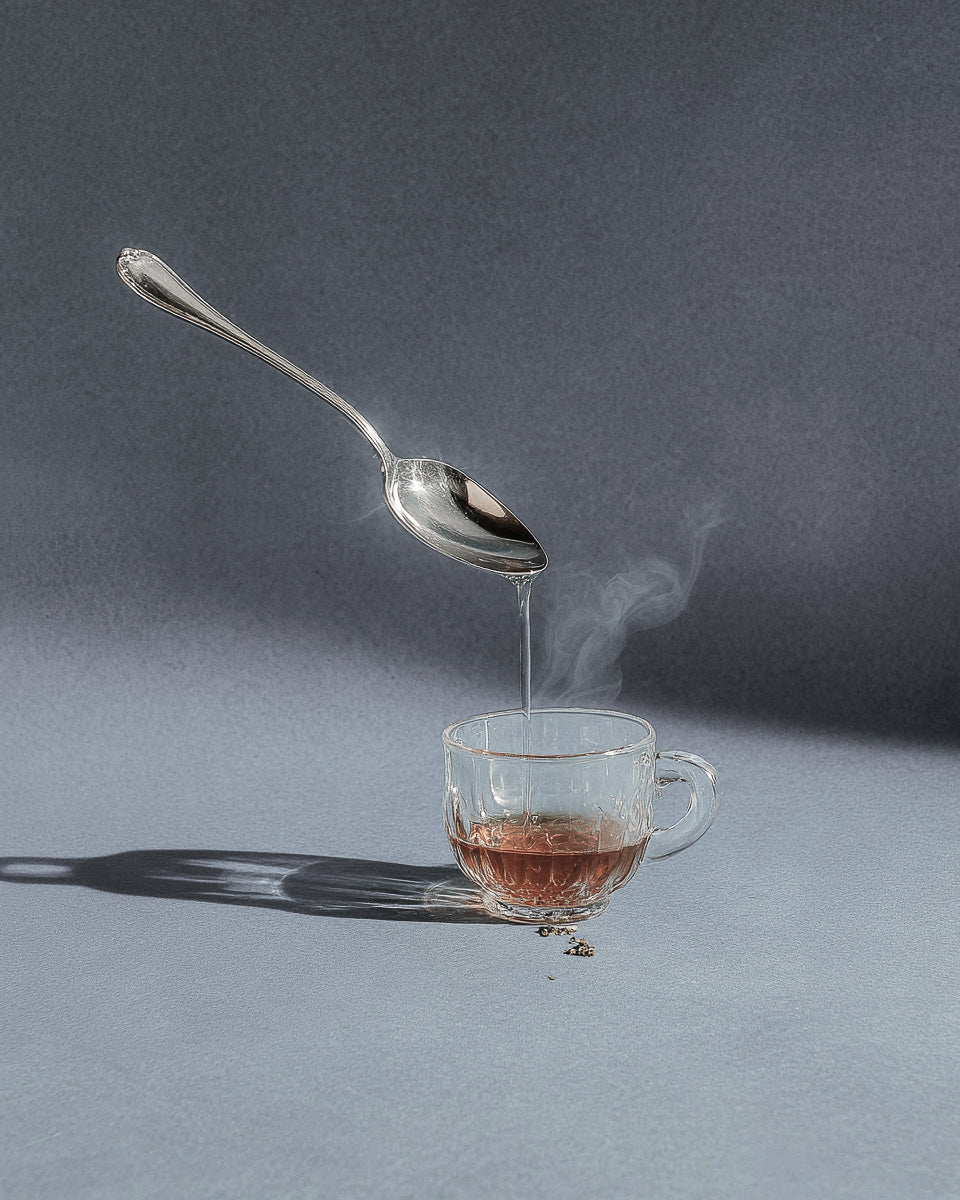
Tea is not simply a drink—it is a discipline of attention. A single evergreen shrub, Camellia sinensis, yields every true tea on earth: white, green, oolong, and black. The difference lies not in the species but in the treatment—the way leaf, air, and fire are allowed to meet. When hot water touches the dried leaf, the transformation is instantaneous: chemistry turns into perfume, color becomes texture, and the moment becomes ritual.
The oldest written mention of tea appears in 200 BCE, within Emperor Shen Nong’s Treatise on Medicinal Plants. From those early brews came centuries of refinement. By the Tang and Song Dynasties, monks sipped tea to stay awake through meditation; scholars wrote odes to its fragrance; emperors practiced its preparation as art. Tea became not just medicine but a mirror for the mind—something to study, not merely consume.
In our atelier, we see tea as a living material, responsive to light, soil, and human touch. A single harvest from the same garden may yield strikingly different character year to year; what the weather conceals, the altitude reveals. We value that instability—the quiet hum of variation that makes each cup unrepeatable. To drink tea is to participate in the landscape that made it.